

2026 NRRA National Conference: Recap and Top Takeaways for the RRG Industry
The 2026 NRRA National Conference brought the risk retention group community together in Chicago from October 5–7 to celebrate a major industry milestone: 40 years of the Liability Risk Retention Act.
Under this year’s theme, 40 Years of the LRRA: Milestone to Momentum, 179 attendees came together to learn, connect, and discuss the issues shaping the future of the RRG industry. Attendees represented a wide range of RRG sectors, including transportation, property, builders and contractors, educational institutions, insurance professionals, sports, hospitality, religious institutions, underground storage tanks, multiple healthcare sub-sectors, and more.
With many first-time attendees joining this year, the conference was filled with new faces, meaningful conversations, and an energy of excitement that made this milestone year a conference to remember.
Thank you to every attendee, speaker, sponsor, and committee member who helped make the NRRA 2026 National Conference possible. Read on for the top takeaways and session recaps from the conference.
Top 8 Takeaways from the 2026 NRRA National Conference
1. AI is both an opportunity and a risk, and every RRG needs an AI Policy.
AI is quickly becoming part of how RRGs, their members, and their vendors operate, but AI also introduces new risks that RRGs need to manage carefully. In their session, AI Governance: Building an AI Use Policy That Works for Your Company, Sara Schroeder (Allied Professionals Insurance Company), Latosha Ellis (Hunton Andrews Kurth LLP), Bradley Dlatt (Lathrop GPM LLP), and Geoffrey Miller (Custom House Risk) cautioned attendees that when an RRG uses an AI tool, the RRG remains ultimately responsible for the outcome, even if the tool was purchased from a third party. They observed that by treating AI as an ordinary enterprise risk, RRGs can apply the same risk management principles they already use: identify the tools, understand how they’re being used, assess the potential consequences, and control them through approvals, boundaries, testing, documentation, and logs. They also recommended that RRGs should adopt an AI policy that works for their company and also takes into consideration the AI use of its members, contracts and agreements with vendor partners, and any additional coverage needed to fill remaining gaps.
Ways RRGs can build an AI use policy that works for their organization include:
Read through the NAIC’s Model Bulletin for AI Use, now adopted by many states.
Make AI governance cross-functional, such as through a committee or task force, with clear owners and a documented review path.
Set boundaries for use, such as separating tools by function and banning the use of personal accounts.
Avoid using AI to make decisions that impact individuals.
Limit the data that goes into AI tools. Start with only what’s necessary and require a business justification for every data point.
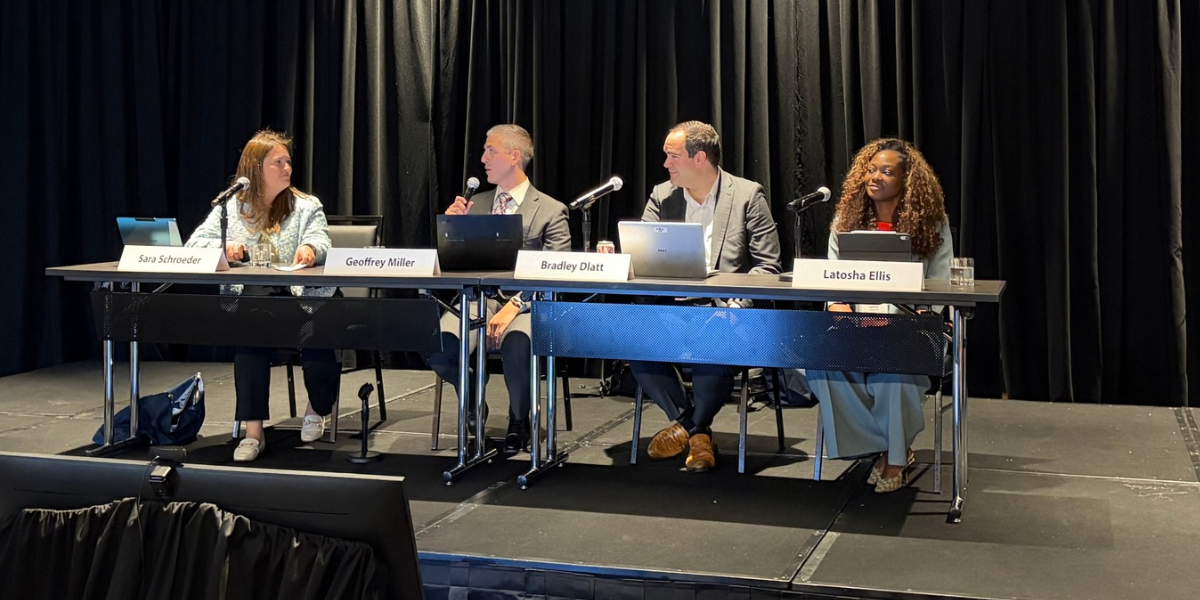
AI Governance - Building an AI Use Policy That Works for Your Company: Sara Schroeder, Geoffrey Miller, Bradley Dlatt, and Latosha Ellis unpacking how RRGs can create well designed AI policies for their companies.
2. Strong governance is an RRG’s best defense against failure.
Tim Herr (NRRA), Dan Petterson (Vermont Department of Financial Regulation), Heidi Rabtoy (Vermont Department of Financial Regulation), and Ben Whitehouse’s (Butler Snow LLP) session, Board Governance Training: Policing Ourselves, centered on the principle that RRG boards must do more than check boxes to fulfill their fiduciary duties and successfully oversee their RRGs’ financial health, strategy, and risk. They voiced that a well-composed, engaged board that meets regularly and has stable leadership helps RRGs adapt to and address issues as they arise, and cement a solid relationship with regulators.
In The Nexus of Risk Management within D&O Claims, Jennifer Hamilton (NAMIC Insurance Company, Inc.), Cassandra Hand-Gallegos (CCMS & Associates), J. Winston Wilcox (One80 Intermediaries / Brokers’ Risk), and Ryan Stokes (Strala), pointed out that strong governance also helps the RRG and its directors defend against D&O claims, where allegations frequently center on failure of oversight.
Steps boards can take to strengthen governance include:
Build a diverse board that brings expertise from the membership’s field, financial literacy, and a willingness to learn.
Fill expertise gaps with each open board seat.
Preserve active oversight by keeping thorough minutes and asking questions rather than rubber-stamping decisions.
Know the financials: understand the RRG’s financials, risk profile, and reinsurance program.
Set focused goals with a long-term plan with objectives that don't work against each other.
Invest in board education through NRRA events, service provider presentations, and shadowing current directors to prepare for succession.
3. Proactive risk management can help RRGs stay resilient as growing uncertainty, nuclear verdicts, and third-party litigation funding reshape the liability landscape.
During their session, Capitalizing on Change: Economy & Investments, Leon Rives (RH CPAs), Carl Terzer (CapVisor Associates, LLC), John Saf (Calamos), and Greg Cobb (Sage Advisory Services) explained that due to the rise of AI and shifted economic, political, and litigation landscapes, RRGs are operating in a new risk order where more outcomes are possible and more risk management is needed. Inflation is expected to remain elevated, nuclear verdicts are growing in number and size, AI-driven social engineering attacks are becoming more sophisticated, and third-party litigation funding and aggressive plaintiff tactics are complicating claims.
In London Celebrates the LRRA’s 40th Birthday, Ted Davey (Gallagher Re), Jessica Gibbons (Apollo Syndicate), and Tilly Gough (Apollo Syndicate) noted that reinsurers, who often feel the impact of nuclear verdicts most, are increasingly concerned with the severity of claims, not just how many there are, and are looking for RRGs that understand their exposure and proactively monitor industry trends and emerging risks.
Rod Nofziger (OOIDA), Chad Sizemore (Dickie, McCamey & Chilcote, P.C.), Geoff Crater (Alpine Transportation RRG, Inc.), Michael Coulter (Aon), and Alex Petrovich (Drover Risk Advisors) discussed how the Supreme Court’s unanimous decision in Montgomery v. Caribe Transport II LLC is adding further uncertainty for trucking RRGs and their members by opening the door to negligence claims against freight brokers in their session, SCOTUS’ Freight Broker Decision: Implications for Trucking RRGs.
All speakers agreed that compared to traditional insurance carriers, RRGs are uniquely positioned to proactively respond to this challenging environment through better risk management.
Ways RRGs can strengthen their resiliency and risk management include:
Reevaluate your claims management process every year to make sure it still reflects your current risk.
Prioritize risk selection. For trucking RRGs, this could be maintaining accurate driver records, vehicle maintenance records, and operations data rather than relying on incomplete public data.
Set an internal verification process with multiple steps for payments above a set amount.
Ensure investments are aligned with the RRG’s long-term goals and reflect how much risk the RRG is willing to take on. Get the right mix of asset class allocations for the RRG’s liability structure, taking into account claims history, claims experience, and what kind of coverage you are writing.
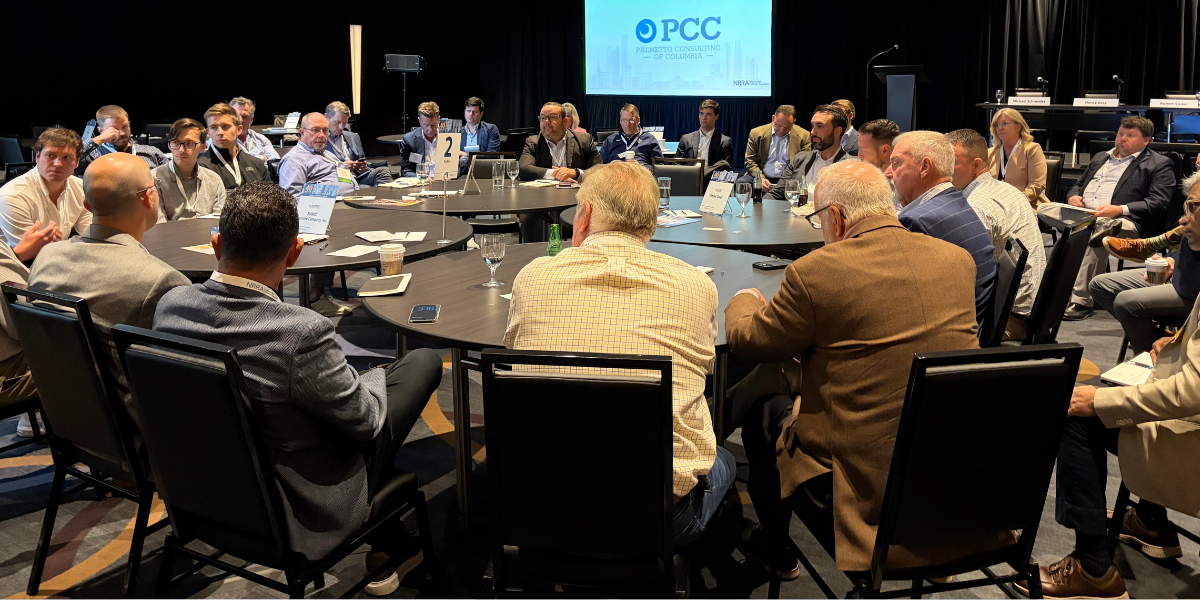
Breakout Roundtables: A large discussion during the Trucking breakout roundtable, led by Geoff Crater and Alex Petrovich.
4. RRG Education = RRG Advocacy
RRGs operate under a unique regulatory structure that is still unfamiliar or misunderstood by the wider insurance industry. This is especially problematic for RRGs operating in non-domiciliary states, where the persistent myth that RRGs are unregulated can lead to regulatory overreach and discrimination against RRGs. Education for regulators, brokers, prospective RRG members, and the public is essential to help the insurance industry to recognize the value of the RRG model. Domiciliary state regulators in the NAIC Risk Retention Group (E) Working Group are currently working to help close this gap with regulators, with charges to develop education for non-domiciliary states and elevate the RRG industry as a whole.
In RRGs Connecting Advocacy to Parent Mission, Heather McClure (Helio Risk, LLC), Robert J. Walling III (Pinnacle Actuarial Resources, Inc.), Kevin Doherty (Dickinson Wright PLLC), and Sandy A. Bigglestone (Strategic Risk Solutions) advised that when advocating for RRGs at the state or federal level, education includes not only clarifying how RRGs operate, but also helping regulators, legislators, and other stakeholders interpret current laws and regulations, and clearly explaining why change is needed and how it benefits insureds.
Ways RRGs can advocate through education include:
Share your success stories with NRRA to elevate them to other RRGs and the public.
Highlight the value of ownership, stability, and other unique RRG benefits when talking with prospective members.
Leverage the RRG resources already adopted by the NAIC including the Uniform RRG Registration Form and RRG Frequently Asked Questions.
Contact NRRA when a non-domiciliary state oversteps. NRRA can follow up with a letter or phone call to the state, and works to educate regulators and policymakers on RRGs and the preemptive provisions of the LRRA.
5. Your domiciliary regulator is a partner, not an adversary.
For the traditional insurance industry, the word “regulator” can bring to mind audits, enforcement, and the fear of a “gotcha.” For RRGs, the relationship with their domiciliary regulator is designed to be a close, collaborative partnership, where both parties are invested in the RRG’s success. In Domicile Regulators: Policing RRGs, Jerry Yoshida (Goodsill Anderson Quinn & Stifel), Steve Kinion (Oklahoma Insurance Department), Christine Brown (Vermont Department of Financial Regulation), and Ann Cunniffe (South Carolina Department of Insurance) noted that unlike the more prescriptive regulation of traditional commercial insurance carriers that tends to focus on areas like market conduct and the availability of insurance, domiciliary regulators regulate RRGs to their business plan, holding them to specific RRG governance standards and taking a risk-focused approach to their oversight. This unique regulatory structure allows for the flexibility and customization that is essential to the RRG model. During the Keynote Interview, Vermont Department of Financial Regulation Commissioner Kaj Samsom described Vermont’s regulators as practical and relationship-driven to David F. Provost (Retired, Vermont Department of Financial Regulation), adding, “If states are the ‘laboratories of democracy,’ then maybe we can say that states are also the laboratories of insurance regulatory innovation.”
Ways RRGs can build a strong partnership with their domiciliary regulators include:
Choose the right domicile for your RRG. As an RRG’s sole regulator, a domiciliary state’s laws, regulatory philosophy, and experience with RRGs will directly influence the group’s structure, formation, and ongoing operations.
Communicate regularly with your regulators. Ongoing dialogue also allows RRGs and regulators to solve problems together right away, and can even help increase capacity and create options for the RRG.
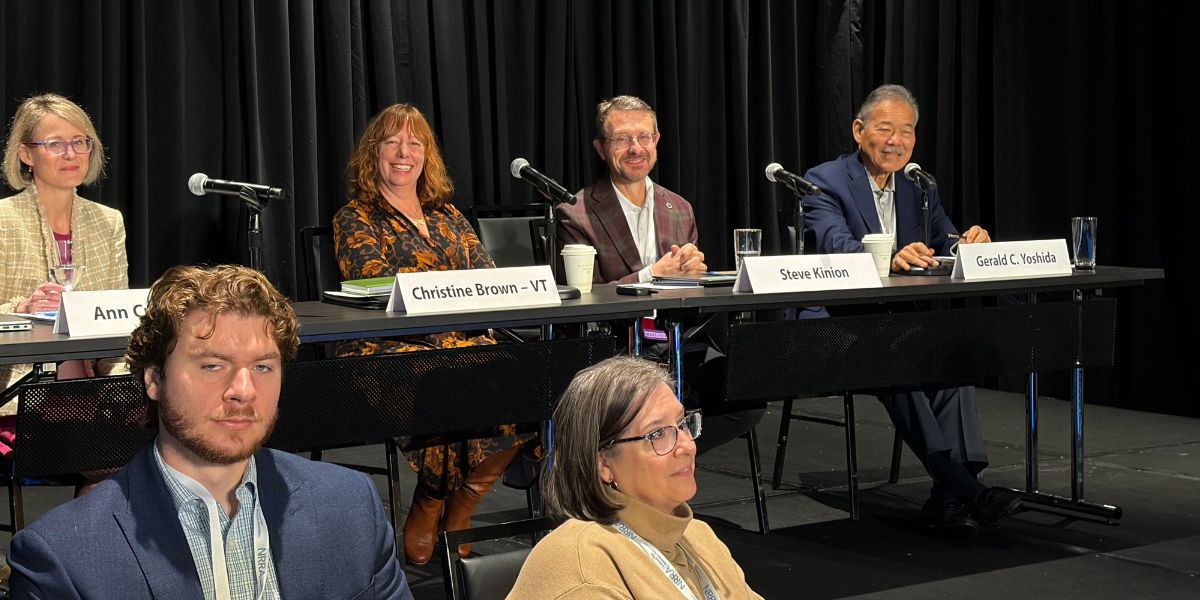
Domicile Regulators - Policing RRGs: Panelists Ann Cunniffe (South Carolina), Christine Brown (Vermont), Steve Kinion (Oklahoma), and Jerry Yoshida joined by regulators from Louisiana and Hawaii.
6. Strong communication with service providers is critical for RRG long-term health and success.
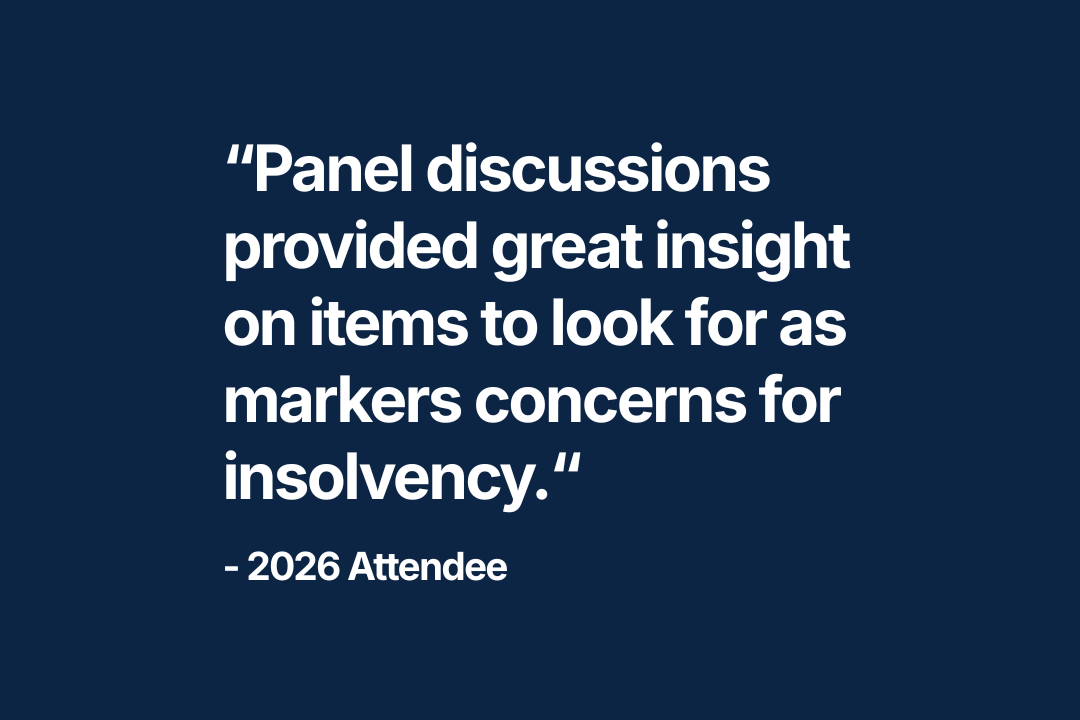
RRGs rely on a network of partners to operate, and the strength of those partnerships depends on how openly and consistently information is being shared by the RRG. In their session, Connecting Data Markers to Potential Failures, Chris Schubert (Pinnacle Actuarial Resources, Inc.), Diana Hardy (RH CPAs), David Roberts (Crowe LLP), Joseph Petrelli (Demotech, Inc.), and Stephen Koca (Milliman, Inc.) articulated that timely communication is especially important for recognizing risk as it changes, because changes in the business being written, the volume of risk being taken, or how claims are handled are among the biggest drivers of adverse results for RRGs. They cautioned that RRGs with more transactional relationships with their service providers may not realize what they are getting into after making a change until it shows up in their reserves. Conversely, when RRGs keep the lines of communication open, they and their key partners have a clearer picture of how an RRG’s risk is evolving and are better equipped to respond before it’s too late.
Ways RRGs can strengthen communication include:
Keep service providers informed about changes that impact risk, such as a new program or a change in claims settlement practices, so they can provide timely insight and adjust their analysis.
Share as much data as possible with reinsurers and notify them of claims early to demonstrate a clear understanding of your exposure.
Share your objectives and risk tolerance with your investment advisors. Asset allocation should fit your RRG’s liability structure, which depends on your claims history, claims experience, and the types of coverage you write.
Communicate proactively with members to gather the data needed for sound underwriting.
7. Service providers can deliver added value to RRGs as strategic partners.
As specialists in their niche industries, RRGs have a deep understanding of their members, including their unique goals, needs, and risks. In RRGs Embracing Their Strengths, A New Approach, Michael Schroeder (Allied Professionals Insurance Company), Robert Stoker (UBS Private Wealth Management), Nancy Gray (Aon Insurance Managers), and Robert Bates (Continuing Care RRG, Inc.) proposed that by focusing on this core competency and partnering with service providers to fill in the gaps, RRGs can build a team of trusted experts without needing to do everything in-house.
In Your Actuary is More Than a Number Cruncher, Randall Ross (Allegiant Actuarial Group), James Wencil (Pinnacle Actuarial Resources, Inc.), and Michael Meehan (Milliman, Inc.) explored specific ways actuaries can add strategic value for RRGs including industry data and trends that the RRG may not have access to, education for board members, goal-aligned strategic recommendations and action steps, and the demystification of RRG financial reports and reinsurance policies.
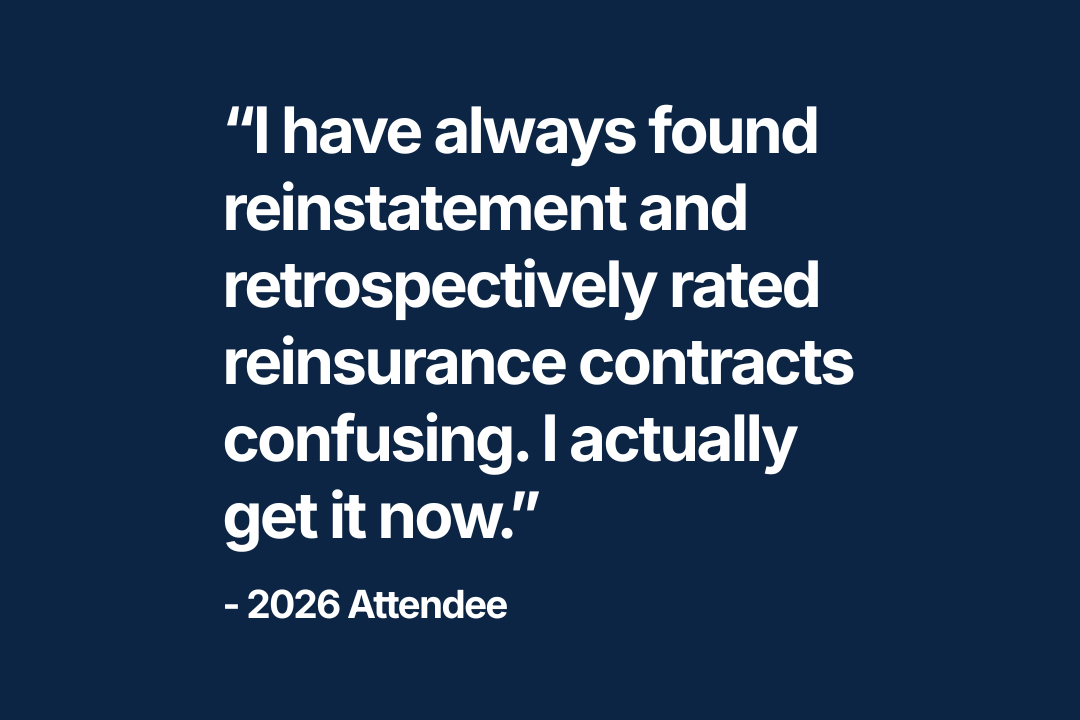
Robert J. Walling III (Pinnacle Actuarial Resources, Inc.) and Troy Winch’s (Risk Services, LLC) session Loss Sensitive Reinsurance Treaties proved the value of strategic service provider insights in real time as they explained how sliding scale ceding commissions work and how they impact loss variability, surplus, risk-based capital, and risk transfer when excess of loss experience is favorable or worse than expected.
Ways RRGs can get more from their service providers include:
Invite your actuary to board meetings. It’s low-hanging fruit, and it gives directors the chance to ask about trends, states, and strategy, not just reserve numbers.
Ask what they’re seeing elsewhere. Providers who work with multiple RRGs can share how other RRGs are performing, what they’re experiencing, and how they’re responding.
Lean on service providers to help educate new board members.
Pressure-test your reinsurance. Ask your captive manager, actuary, or broker to show what happens with no excess claims, with one full-limit claim, and the point where a fixed-rate product would have been cheaper.
Give reinsurers what they’re looking for: A realistic business plan, a consistent long-term strategy, and a clearly defined niche.
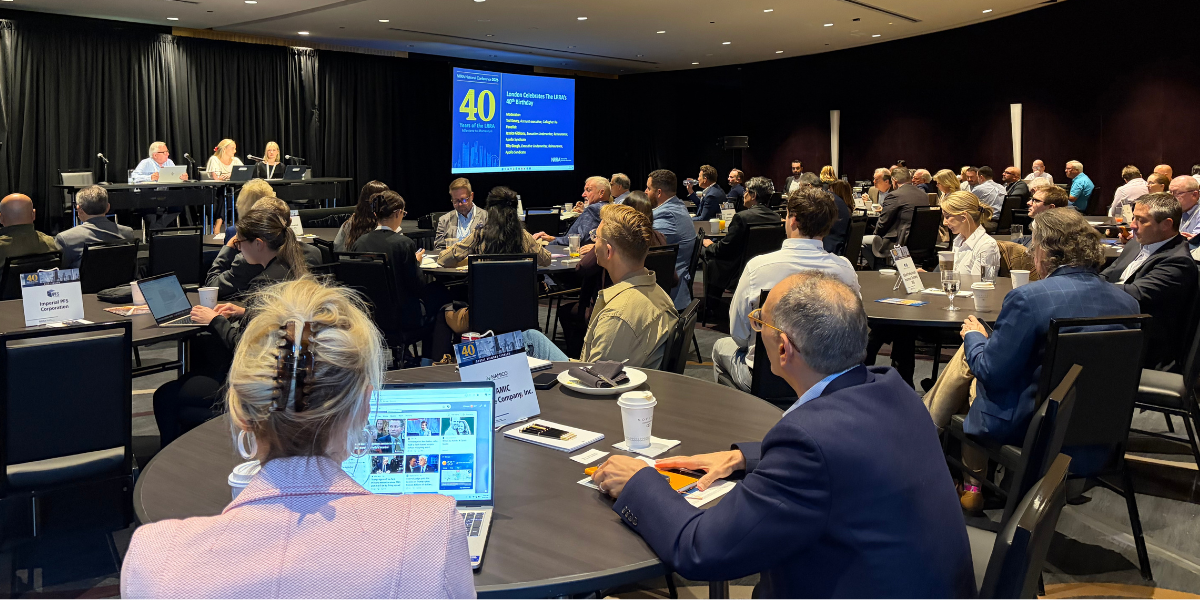
London Celebrates the LRRA’s 40th Birthday: Ted Davey, Tilly Gough, and Jessica Gibbons representing the London reinsurance market and its long-standing partnership with RRGs.
8. 40 years after the passing of the Liability Risk Retention Act, the RRG industry still has room to grow.
During the closing session, Is the RRG Industry Finally Ready for Growth?, Colin Donovan (STICO Mutual Insurance Company, RRG), Anne Marie Towle (Hylant), Nancy Gray (Aon Insurance Managers), and Allan Autry (Johnson Lambert LLP) voiced that successful RRGs continue to prove that the RRG model is a viable alternative for specialized liability insurance. Although the industry has seen more premium growth with fewer RRGs in recent years, they highlighted where there is clear room for the industry to grow, both within existing RRGs and through new ones.
Opportunities for RRG growth include:
Growth within existing RRGs. Over 50% of RRGs have the potential to grow their membership and premium by providing member benefits.
Emerging and underserved industries. The flexibility of the RRG model allows it to serve a wide range of industries, including innovative and evolving areas that are currently underutilizing the model. Examples include AI, renewable energy, software and technology, E&O, home and community-based care, healthcare, and senior living facilities.
Hard market conditions. RRGs have historically seen the most growth during hard markets. As traditional insurers increase prices or pull back, companies and industries will continue to look for a more stable solution for their unique liability needs.
Built-in advantages over traditional insurance carriers amidst growing uncertainty. The RRG models’ member-first design, deep expertise in the industry they serve, and focus on risk management all help RRGs better and more quickly respond to emerging risks and shifting economic, political, and litigation landscapes.
The biggest challenge to future RRG growth is the continued misunderstanding and lack of awareness of RRGs. Overcoming these will require NRRA and the entire RRG industry to work together to continue educating, pushing back against regulatory overreach, and advocating for the RRG model.

2026 NRRA National Conference Sponsors





































2026 NRRA National Conference Committee
Conference Committee Co-Chairs:
Heather McClure, Managing Partner & General Counsel, Helio Risk, LLC
Lisa Poulin, Consultant, Milliman
Conference Committee:
Andy Roderique, VP Sales-Wholesale & IPFSDirect, IPFS Corporation
Colin Donovan, President, STICO Mutual Insurance Company, a RRG
Rod Nofziger, Chief Operating Officer, OOIDA Risk Retention Group, Inc.
James Jean, Underwriter, HAI Group
Chris Schubert, Senior Consulting Actuary, Pinnacle Actuarial Resources, Inc.
Matt Holycross, Managing Member, Palmetto Consulting of Columbia, LLC
Renea Louie, CEO, Sotera Global Management
About NRRA
The National Risk Retention Association (NRRA) is the only nonprofit organization solely dedicated to the development, education, promotion, and advocacy of risk retention groups (RRGs) and risk purchasing groups (RPGs) nationwide. Join the leading voice of the RRG industry and become an NRRA member today.